
PROBLEM GUIDE
Airborne dust? Capture it where it starts.
Fugitive dust harms workers, machines and neighbours. The fix starts with finding every point where dust is released – then matching droplet size to dust size.
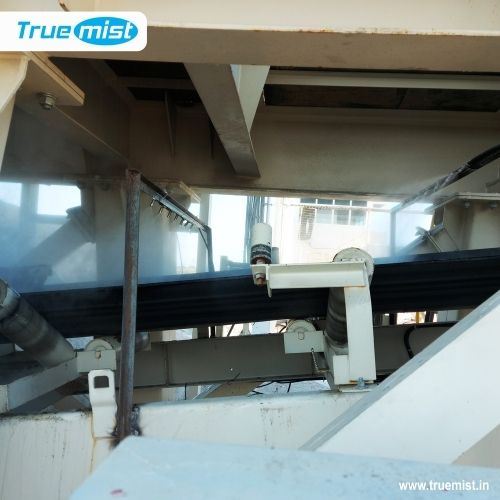
What you notice
- Visible dust clouds at transfer points or tipping
- Dust settling on equipment and nearby roofs
- Complaints from neighbours or inspectors
- Workers using masks all shift
Common causes
- Material falling between conveyors or into hoppers
- Crushing and screening
- Wind across stockpiles and haul roads
- Leaky skirts and open chutes
BEFORE YOU BUY
What to check before choosing a system
- List every dust point with photos
- Material type and moisture tolerance
- Enclosure condition at each point
- Water, power and air availability
SOLUTIONS THAT FIT
Systems that solve this problem
Dust suppression
Fog and mist at transfer points, crushers, hoppers and stockyards.
Dry fog dust suppression
Micron-sized fog for fine dust where material must stay dry.
Fog cannons
Long-throw mist cannons for open yards, demolition and haul roads.
KEEP EXPLORING
Related solutions and guides
FAQS
Questions we are often asked
Why doesn't my water sprinkler stop the dust?
Large droplets fall without meeting fine dust, and can wet material. Smaller fog droplets capture respirable dust.
Will fog make my material wet?
High-pressure fog adds little moisture; dry fog even less.
Can one cannon cover my whole yard?
Sometimes; large or windy sites need several cannons or perimeter lines.
LET'S DEFINE YOUR REQUIREMENT
Your application deserves the right system.
Share your operating conditions. Start with a conversation, not a pre-selected package.